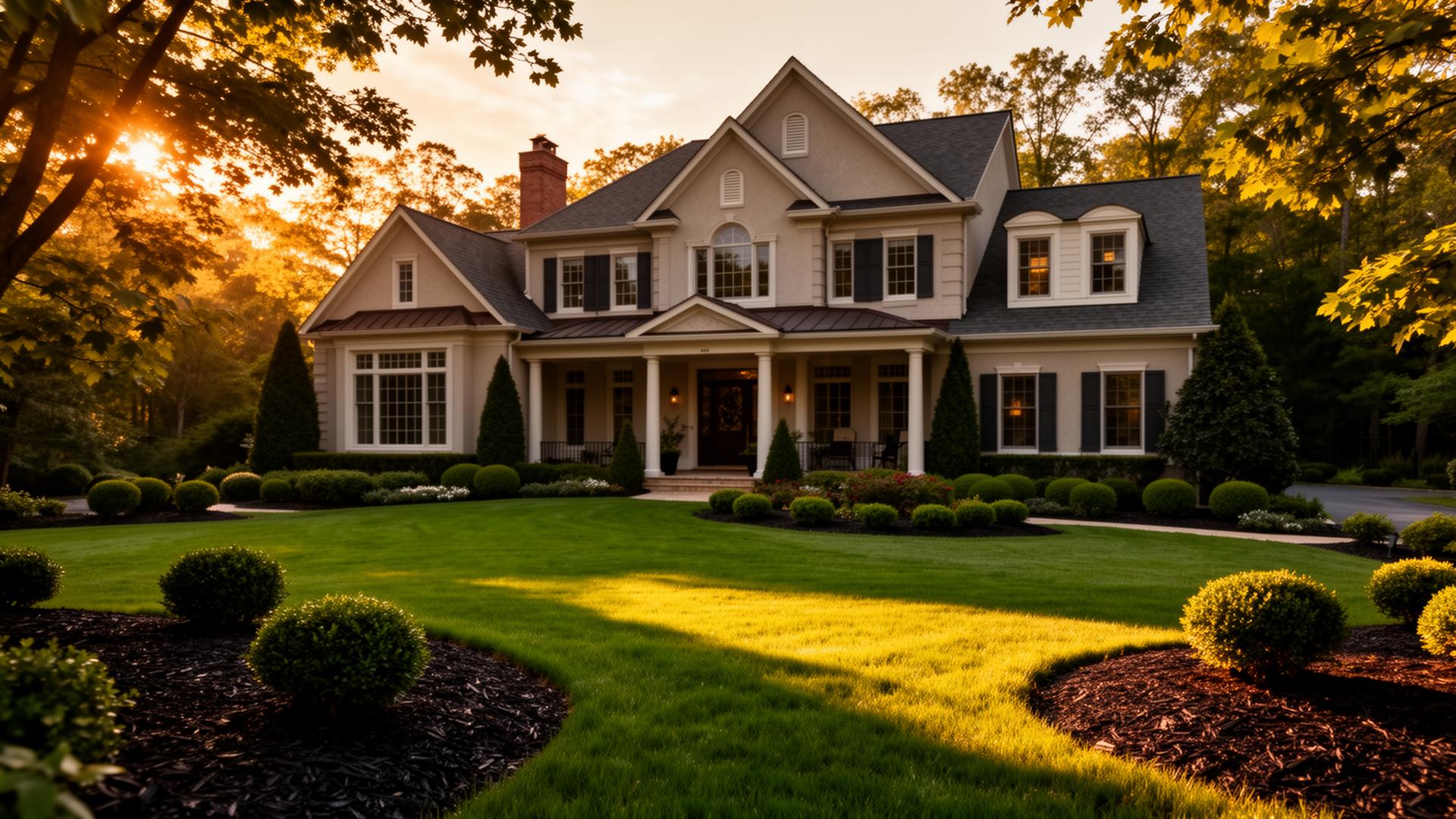
Harford County sits in the transition zone between Northern cool-season grasses and Southern warm-season grasses. That's why lawns here — mostly tall fescue with some Kentucky bluegrass — thrive when you feed and treat them in short, well-timed windows and back off during Maryland's hot, humid summers. Below is the treatment schedule we use on the lawns we maintain from Bel Air to Havre de Grace.
Wake the lawn up
- Apply pre-emergent crabgrass control when soil hits 55°F (usually mid-March in Bel Air / Abingdon).
- First fertilizer application — balanced slow-release nitrogen once forsythia bloom.
- Spot-treat broadleaf weeds (dandelion, clover, chickweed) as they emerge.
- Raise mower deck to 3.5"; sharpen the blade before the first cut.
- Rake matted spots to expose thin turf for overseeding if needed.
Protect and coast
- Mow at 4" — never scalp cool-season grass in Maryland heat.
- Water 1" per week, early morning, deep and infrequent.
- Skip nitrogen feedings — summer fertilizer stresses tall fescue and feeds weeds.
- Spot-treat crabgrass and nutsedge as they appear.
- Watch for grub damage in late July / August; treat curatively if you see brown patches lifting like a rug.
The biggest window of the year
- Core aerate — the single highest-impact treatment for compacted Maryland clay soils.
- Overseed with a tall fescue blend rated for the transition zone.
- Starter fertilizer at seeding; follow with a fall feeding 4–6 weeks later.
- Broadleaf weed control while weeds actively feed roots (best weed kill of the year).
- Keep leaves off the lawn — mulch-mow them into fine confetti or bag heavy drops.
Set up next year
- Winterizer fertilizer around Thanksgiving — the most valuable feeding of the year for root reserves.
- Final low mow (around 3") before the grass goes dormant to prevent snow mold.
- Clear leaves and debris — matted leaves smother turf under winter snow.
- Sharpen mower blades, clean and store equipment for spring.
- Plan next year's treatment schedule and book recurring service before spring slots fill.
The Harford County treatment schedule at a glance
| Window | Treatment | Why here |
|---|---|---|
| Mid-March – early April | Pre-emergent + spring feeding | Blocks crabgrass before Maryland soil temps hit 55°F. |
| Late April – May | Broadleaf weed control | Kills dandelion, clover, and chickweed while they're actively growing. |
| June – August | Mow high, water deep, spot-treat only | Cool-season turf is stressed; no nitrogen feedings. |
| Late August – mid-October | Core aeration + overseed + starter fertilizer | The single most valuable window for Maryland lawns. |
| October – early November | Fall feeding + broadleaf weed control | Weeds pull nutrients to roots — best kill of the year. |
| Late November | Winterizer fertilizer | Fuels root storage for a strong spring green-up. |
Lawn treatment services vs. DIY in Harford County
DIY works if you're willing to time six windows accurately, buy the right products, calibrate a spreader, and stay off the lawn after applications. Most homeowners we work with in Bel Air, Abingdon, Fallston, Forest Hill, and Havre de Grace hire a recurring service for two reasons: timing (missing the fall window costs you a whole year of turf progress) and mowing height (a service that mows too short in July undoes every treatment you paid for). If you want it handled end-to-end, our weekly lawn service includes proper mowing height, edging, and blow-down, and pairs with a treatment plan we build for your yard.
Frequently asked questions
When should I start lawn treatment in Harford County?
Mid-March to early April, right around when forsythia bloom. That timing catches crabgrass before it germinates and gives cool-season turf its first push of the year.
How often should I fertilize?
3–4 applications a year for cool-season lawns: early spring, late spring, early fall, and late fall. Skip mid-summer — Maryland heat plus nitrogen stresses tall fescue.
Is aeration really necessary?
In Harford County, yes. Local soils are heavy clay and compact quickly. Core aeration in early fall is the single highest-impact thing you can do for lawn health.
How much does lawn treatment cost in Harford County?
A full 6-application program on an average residential lot runs roughly $400–$700 per year, depending on square footage. We quote every yard individually with no obligation.
Want a lawn plan built for your yard?
Every Harford County lawn is a little different — sun exposure, soil, grass mix, and how the previous owner treated it all matter. We'll walk your property, give you a treatment schedule tailored to it, and quote it in writing.